

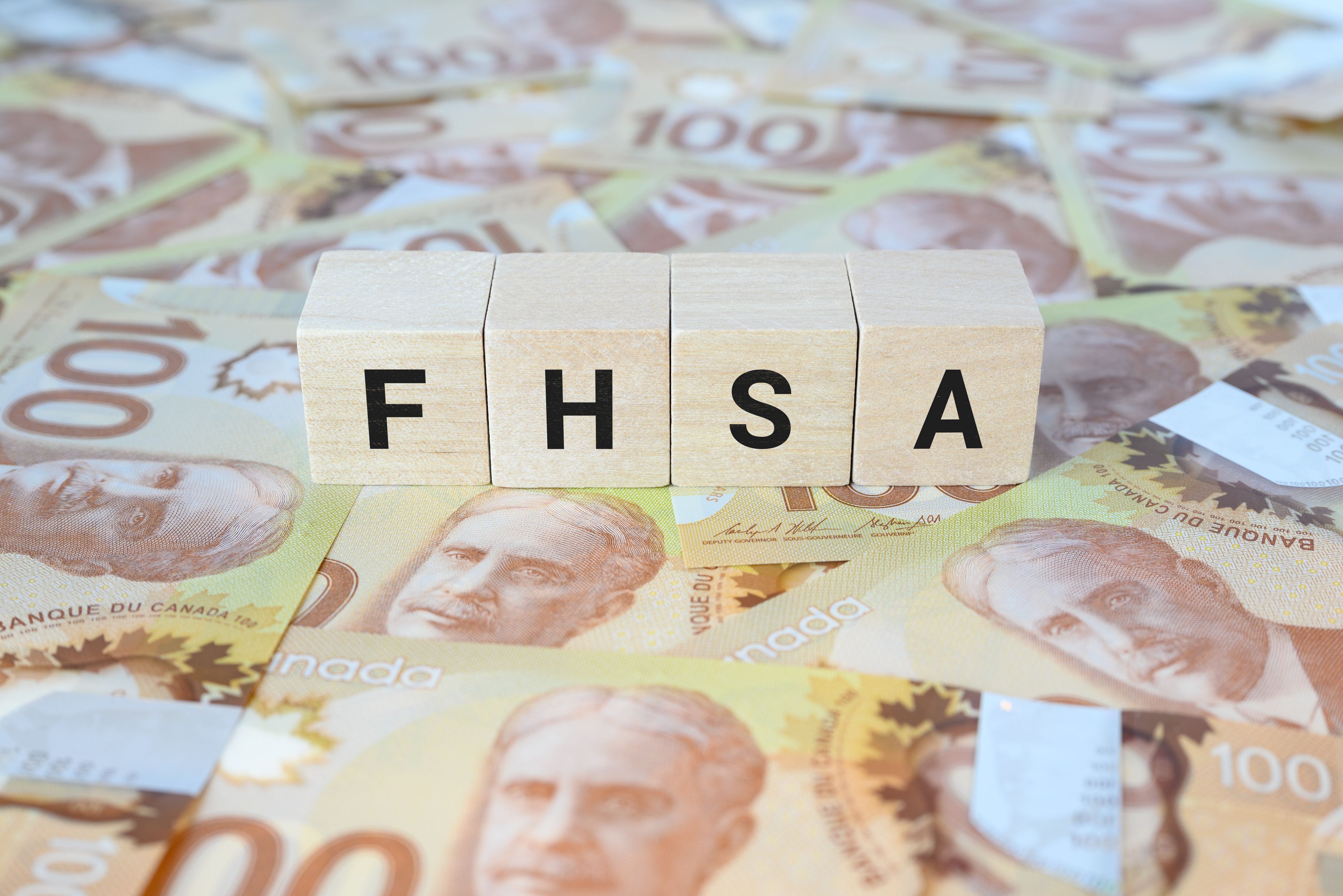
Since its launch in 2023, the First Home Savings Account (FHSA) has been a frequent topic of discussion. And rightfully so. The account is an incredibly appealing option for first-time home buyers in Canada, especially as home prices remain high.
While many people are familiar with the FHSA, not everyone is aware of its finer details, including contribution rules, withdrawal rules, and eligibility. In this article, we’ll walk through these topics and more to answer some of the most frequently asked questions about this plan.
What are the contribution rules?
An FHSA has an $8,000 annual contribution limit and a $40,000 lifetime contribution limit. There’s also a maximum participation period of 15 years.
Why use an FHSA?
A FHSA provides a number of benefits that make it a great option for anyone saving for a home, including:
- Tax-free growth: Any investment growth in your FHSA is non-taxable
- Reducing your yearly tax bill: Just like an RRSP, contributions to an FHSA can reduce your taxable income
- Non-taxable withdrawals: Qualifying withdrawals to buy a home tax-free
Who can open an FHSA?
You must be a Canadian resident who is at least 18 years of age (or the age of majority in your province or territory) and under age 72.
You also, of course, must be a first-time home buyer. This means you didn’t live in a qualifying home (more information is available here) owned by you, your spouse, or a common-law partner as your principal place of residence in the same calendar year or in any of the previous four calendar years.
Who can contribute to an FHSA account?
Only the FHSA holder can contribute and claim the tax deduction for contributions made to their FHSA. Unlike RRSP accounts, there is no spousal FHSA. You cannot directly contribute to your spouse or partner’s FHSA and claim a deduction.
However, legislation does allow others, such as parents or grandparents, to gift money to the account holder to invest without attribution rules applying when the money is withdrawn to purchase a home.
How much can you withdraw from an FHSA?
There’s no limit on qualifying withdrawals. You can pull your money either as a single withdrawal or a series of withdrawals. For example:
- If you’re buying or building a qualifying home together with another individual, both of you can make a qualifying withdrawal from your own FHSAs, as long as you both meet the withdrawal conditions.
Any funds remaining in the account after the home purchase can be transferred tax-free to an RRSP before the end of the year following the year the qualifying withdrawal is made. These transfers will not reduce your RRSP contribution room.
You can visit the Canada.ca website for more information about qualifying withdrawals.
What can you invest in?
Just like an RRSP and TFSA, you can hold investments such as mutual funds, exchange-traded funds (ETFs), publicly traded securities, government and corporate bonds, and guaranteed investment certificates (GICs) in your FHSA.
Can you use an FHSA and Home Buyer's Plan (HBP) together?
Yes; however, withdrawals from your RRSP through the HBP are limited to a $60,000 maximum withdrawal limit and have to be paid back into your RRSP in equal payments over the next 15 years.
For more information on the Home Buyers’ Plan please visit Canada.ca for a list of resources.
What if you don't use all of your funds in your FHSA for a home purchase?
If you do not use your FHSA to purchase a qualifying home, you can transfer your unused savings to your RRSP (or RRIF) without affecting your contribution limits.
Alternatively, you can withdraw your unused FHSA savings from your account and the withdrawal will be taxed in the year it’s received.
It starts with a conversation
A first home is a major financial milestone, and an FHSA is a powerful tool to help reach it. If it’s relevant for someone in your family, your Investment Counsellor is a great place to start the conversation.