Rob Campbell [RC]: Coming up, Peter Lampert joins me to discuss war in the Middle East and how our international equity team is thinking through its potential implications. Peter walks through the impacts on specific holdings like TSMC, the portfolio overall, and summarizes our nearly 40-year history following Shell. Plus, why a changing market backdrop has forced investors to think a little harder about what quality really means.
[DISCLAIMER] This podcast is for informational purposes only. Information relating to investment approaches or individual investments should not be construed as advice or endorsement. Any views expressed in this podcast are based upon the information available at the time and are subject to change.
[RC]: Peter, welcome back to the podcast.
Peter Lampert [PL]: Thanks, Rob. Great to be back.
[RC]: Can we start with a topic that I think is likely very top of mind for many of our listeners, and that's the Middle East? To start, I guess I'm less interested in the play-by-play, as I'm sure some of the specific details will change between now and whenever this conversation gets published. I'm more interested in the bigger picture, a month and a half into this war, and at least so far in April, equity markets which seem to be looking through the conflict.
[PL]: Certainly, when it comes to war, there are lots of considerations around the humanitarian issues, geopolitical issues, and for investors, the focus is really on oil and LNG and the impact that can have on the global economy. You're right—right now, the Strait of Hormuz is shut.
Both Iran and the U.S. have their blockades in place. Ships are not getting through, at least not in any meaningful volumes. As a result, oil and gas production from the Middle East, a large part of it, is not getting to global markets.
As you've said, equity markets seem to be largely looking past this, assuming that a resolution will come in time before there is significant impact on the global economy. Clearly, the longer this goes on—the longer we have shortages of oil and LNG getting to market, higher oil prices—the risk of that impacting the real economy and tipping the global economy into recession rises the longer it goes on.
[RC]: You mentioned some of the potential direct impacts, recognizing that, the market is thinking long term and probabilistically. What are some of the paths from here that you and the team are thinking of most carefully?
[PL]: The two main things we're watching in terms of how it would impact the global economy and equity markets are the flow of oil and LNG. One, just the blockade through the Strait of Hormuz. Can ships export oil and LNG? And two, will there be significant damage to oil and gas infrastructure in the region if the war resumes, if there are attacks on oil and gas infrastructure?
What we saw prior to the ceasefire when missiles were flying is fairly restrained attacks, not targeting much oil and gas infrastructure. The largest disruption was to Qatar's LNG infrastructure, which we estimate took out about 3% of global LNG production. They're saying it'll take 3-5 years to repair that.
That's quite significant, but we haven't seen other significant damage that would dramatically reduce oil and gas production over the medium term. The market's largely looking through this, but those are the two key risks. Can the Strait open up and can further damage to oil and gas facilities be avoided?
[RC]: Thinking of the portfolio, I know we do have some exposure directly to energy, but what are some other parts of the portfolio, maybe the users of that energy that you are thinking through most closely at the moment?
[PL]: We're always monitoring the portfolio, going through and looking where the risks are, and the sharp edges. Are there any adjustments to be made? We haven't made a lot of significant adjustments in regard to the Iran war, because we already positioned the portfolio to be diversified, resilient, and to be able to withstand a range of options. As the incremental cards have come out, as the risk seems to be increasing that there could be disruption to the global economy from higher for longer oil and gas prices.
We have reduced some of our exposures to some of those areas that could be most impacted, such as travel, consumer spending, and areas that could be directly impacted by higher energy prices. If that was priced into the stocks, perhaps we would not be making any adjustments. Like you said, the market's largely looking through this.
In our assessment, the risk is to the downside for these stocks, given that they're already priced for business as usual going forward in our estimate.
[RC]: Can I ask you for a case study? Our top holding TSMC, with a significant portion of their operations based in Taiwan, Taiwan being a country that imports a lot of natural gas, presumably from the Middle East. Semiconductor fabrication using a ton of energy, natural gas, and other resources, a portion of which either directly or indirectly is impacted by this war.
How is a company like TSMC impacted? How does management think about these risks? How do they plan for what's going on right now?
[PL]: I think TSMC has a world-class management team, fantastic operators of the business. They know how important their position is to the global economy. The global economy is relying on the chips that they're making, and they take that position very seriously.
In our assessment, they have done a very good job of building the resilience and building up inventories. There's been a lot of discussion around helium, which is a by-product of gas production coming out of the Middle East, and those shipments are being stopped. But our understanding is that TSMC, across most of its inputs, has a good stockpile of inventories. Suppliers have additional inventories.
It's generally well positioned, but you specifically asked about energy. TSMC relies on Taiwan as a country, and the government, to provide LNG and power to the industry. That is a risk. If there were any interruptions or shortages, what we've seen in previous instances when gas prices first spiked in the Russia invasion of Ukraine, and then as well this time around, Taiwan is in a fortunate position.
Although being heavily reliant on imports, being a wealthier country, and having a very profitable semiconductor industry to support, they will be able to pay higher prices and afford to keep the gas flowing. Worst case, they could look to coal or other fuel sources as a temporary measure, which they previously phased out coal. It would likely be the poorer countries that would suffer the most while the wealthier countries could still secure supplies.
[RC]: As you mentioned, for a company like TSMC, given its importance and the high regard that we have for its management team, these are not things that are new for them. They've been thinking about resource constraints based in Taiwan for some time, just given the success they've had as a company. Peter, can we shift maybe to something a bit adjacent?
You mentioned this topic of preparing. We've been preparing the portfolios for some time, even thinking back the last five years, given some of the adjustments that we've seen in the world. You mentioned the previous spike with Russia's attack on Ukraine.
We have one today. Diversification is something that I've heard a lot from you and your team, with a real emphasis on this. Can you provide a bit of a backdrop on just what that's looked like over the last couple of years?
[PL]: Our goal is always to have a diversified portfolio of companies that meet our investment criteria, so wealth-creating companies with excellent management teams trading at discounts to intrinsic value. Then we try to put those together in a portfolio that can be resilient to a wide range of outcomes. That means being diversified and having different exposures.
In the international portfolio, there are large exposures to Europe and Asia. We talked about TSMC. These are largely energy-importing countries and economies. They could be hurt by higher oil and gas prices. Do we have offsets to that? Do we have some companies in the portfolio that still meet our investment criteria, but would benefit from higher oil and gas prices?
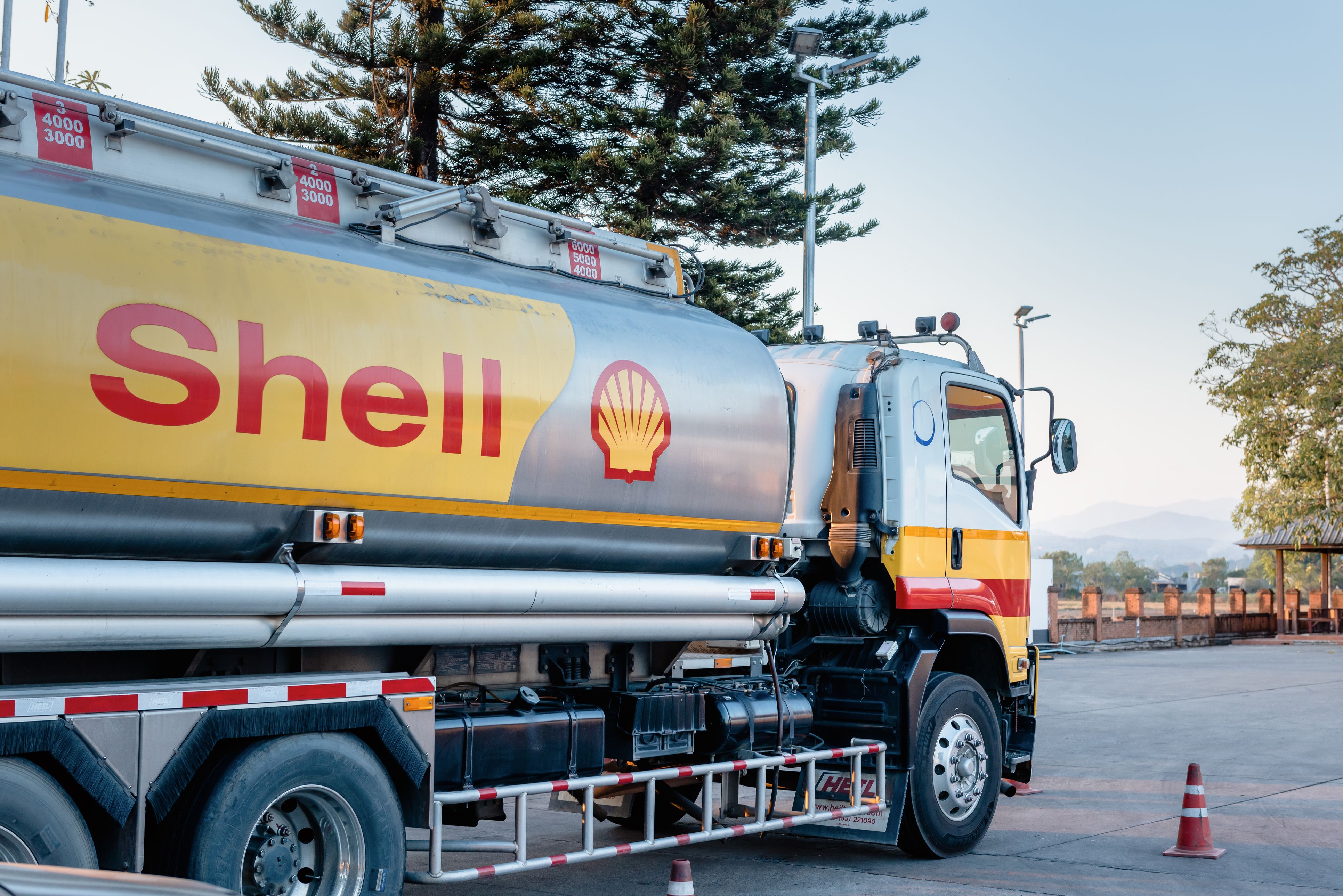
The obvious ones being the oil and gas producers themselves, as long as their production is outside of the Middle East. We have a number of those exposures, Shell being our largest, but also leading companies with production in Brazil, Norway, and Australia. They're currently benefiting from higher oil and gas prices. Having that diversification in the portfolio helps improve the resilience without having to bet on what the outcome will be but just having those different beneficiaries so the portfolio could do well in a variety of scenarios that unfold.
[RC]: Can you talk a little bit more about Shell? Just because we have such a long history with that company.
[PL]: Shell has been in the portfolio since this portfolio started in 1987. We held it for decades. We previously exited it in 2015.
At that time, we had some concerns generally around discipline in the oil and gas industry. Oil price was $100 a barrel. Management teams were assuming that would continue and using that to justify their further investments with quite a bit of risk that they would not earn adequate ROICs, returns on invested capital, if the oil price fell.
Predictably in the cyclical industries, as prices are high and it attracts more investment, you get an oversupply situation and prices come down. That was the situation we were concerned about on a bottom-up basis, and on a forward-looking basis. We were concerned that these companies may not be wealth creating going forward.
We exited Shell and some other commodity producers at the time. That has unfolded. The industry went through a period of lower oil prices. It was very difficult for the oil and gas companies, including Shell. They went through a get-fit program and now they've come out much stronger businesses.
Shell has new management. They're running the business very efficiently, very focused on costs, very disciplined on their incremental investments, and looking for areas where they can earn high returns on invested capital. As a result of that, we re-initiated the position in 2022.
We think they're well-positioned. Even in a $60 oil price environment, which is kind of our base case, we put some ranges around that. We think the company is likely to continue to be a wealth-creating company, earning good returns on invested capital.
The valuation will continue to be attractive. In the meantime, the longer oil and gas prices remain elevated, that sort of windfall profits or additional upside on top of our base case investment thesis.
[RC]: Your description of the last little while since we reinvested in Shell back in 2022 does overlap with a period of underperformance for our portfolio relative to benchmarks. This notion of quality as a factor being out of favor for the last couple of years. Is that something you've felt even looking back on 2025?
It appears like it was a bit of a lower quality market. How do you think about that within the context of our investment philosophy?
[PL]: Definitely. There's been a lot of talk amongst investors about quality being out of favor, underperforming over the last 5 years. If I look back on my history, I joined Mawer in this portfolio in 2008. From that time onward till 2021, the traditional quality companies generally outperformed.
These are the companies that Mawer focuses on. Strong competitive advantages can earn good cash flows, generally less cyclical, have structural growth drivers, and they're very attractive for all of those reasons, if you can buy them at reasonable valuations. What we saw is in a period of low interest rates, when the global economy growth was lower, interest rates were lower, inflation was lower, nominal growth was lower, and many companies didn't have much growth.
We talked about Shell and the oil and gas companies going through a period of lower commodity prices. Same with mining companies, and same with banks going through a period of lower interest rates. Many of the other industries were really suffering or showed very minimal profit growth.
The really high-quality companies will continue to perform very well. As a result, investors really focused on those companies. We saw more investor interest and enthusiasm for those companies.
The valuations got bid up and the stocks performed over that period. That ended in 2022 when interest rates started to rise, and inflation started to rise. We went back to an environment where commodity prices are higher, and interest rates are higher.
Some of those other industries outside of this quality bucket, whether it's the banks, the commodity producers, then became more profitable again. We saw investors rotate into those industries essentially and leaving the quality bucket behind. That's the backdrop of what has happened. Many of them are still very good companies, but those traditional quality companies did experience a significant re-rating, which is partially given back some of those returns over the last 5 years.
For us, what does that mean? It means really doubling down on our investment philosophy, focusing on those wealth-creating companies with excellent management teams and discounted value, but making sure we're being forward-looking on that.
Not only looking at what's been a quality wealth-creating company in the past, but really make sure we're looking forward. In many cases, it's the same, these high-quality companies. Historically, we think there will continue to be good, high-quality companies going forward.
In some cases, there are headwinds where maybe we expect lower returns on capital, lower growth rates going forward. For example, maybe a software company prone to AI disruption. Meanwhile, on the other hand, there are great companies that typically wouldn't fall into the traditional quality bucket that investors would look for. Such as the European defense companies that we've invested in since 2022, where historically the returns and the growth rates weren't that attractive.
With Europe committing to higher defense spending after the Russian invasion of Ukraine, we had a much stronger outlook for these companies, and for the companies that were already the industry leaders. They became much more attractive on a forward-looking basis.
We've seen that now reflected in the stock performance since 2022. A more recent example, last year we invested in memory companies like Kynix and Samsung out of Korea. Again, historically a more cyclical, tougher industry, more commoditized products.
With the demand from AI servers, that's become a fundamentally more attractive industry, more profitable, and we expect them to earn higher returns going forward. Really taking that forward-looking view, applying our investment philosophy across the entire universe, where we can find the best opportunities that meet our criteria and help make the portfolio more diversified and resilient.
[RC]: Fantastic. Peter, any last words or thoughts for clients?
[PL]: As always, I would reiterate our investment philosophy of buying wealth-creating companies with excellent management teams at discount intrinsic value, trying to put those in a well-diversified and resilient portfolio. There's a lot of noise right now, especially around the Iran war, around AI investments.
For us, focus on what's important, not trying to convince ourselves that we can predict the future, but rather putting the odds in our favour by buying great companies, building a resilient portfolio, and taking that long-term perspective.
[RC]: Yes, the job of running scenarios and thinking probabilistically, it's less about figuring out what will happen, but rather, what if we're wrong in like 5 different ways at once and making sure that we're okay regardless. Peter, thank you so much for your time and for your work on the international portfolio.
[PL]: Thanks.
[RC]: Hi everyone. Rob here again. To subscribe to the Art of Boring podcast, go to mawer.com, that's M-A-W-E-R dot com forward slash podcast, or wherever you download your podcasts. If you enjoyed this episode, please leave a review on iTunes, which will help more people discover the Be Boring, Make Money philosophy. Thanks for listening.
Resources:
Podcast
The Art of Boring
Companies mentioned include:
TSMC (Taiwan Semiconductor Manufacturing Company) - Top portfolio holding, semiconductor manufacturer
Shell - Oil and gas producer, held since 1987 (with exit in 2015, re-entry in 2022)
Kynix - Korean memory chip manufacturer
Samsung - Korean memory chip manufacturer



 podcast