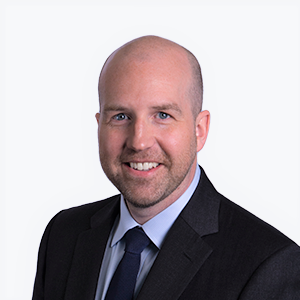
[00:00] Andrew Johnson: Hi everyone, as we kick off 2026 with today's episode, I sit down with Mark Rutherford, portfolio manager for our Canadian equity portfolio. Mark cuts through some of the noise in 2025 to see what actually moved markets here in Canada. And from the fallout of Liberation Day to the intervention in Venezuela, the geopolitical playbook is shifting.
Mark breaks down both the short and long-term implications from the U.S. asserting itself with Venezuela and the biggest traps investors fall into when global rules change. Enjoy.
[00:33] Disclaimer: This podcast is for informational purposes only. Information relating to investment approaches or individual investments should not be construed as advice or endorsement. Any views expressed in this podcast are based upon the information available at the time and are subject to change.
[00:50] Andrew Johnson: All right, welcome back to the podcast, Mark. How are you?
[00:53] Mark Rutherford: Good, how are you, Andrew?
[00:55] Andrew Johnson: I'm doing great and it's great to see you again. We're going to get into the recent events and headlines in a moment, but I wanted to first just kind of go back to 2025. Even though it might feel like a decade ago, it was a pivotal year for Canada.
We had the federal election, we had “Liberation Day,” we had plenty of other noise outside of those. But in your view, what did you see as the real market movers over the year and how did you navigate through those themes?
[01:24] Mark Rutherford: Yes, it was categorized by a number of big shifts. Not only did you have the U.S. election in late 2024 and new administration come into power in 2025, Canada also had its own federal election that coincided soon after “Liberation Day.” Obviously, there's a really big shift in the Canadian markets, a lot of fear and risk-off in the markets post the potential economic and market impacts of tariffs and wide-ranging tariffs across a number of countries globally. As we saw news develop throughout the year, it became more clear that that was more of a starting point in negotiations. A lot of the big major areas of the Canadian economy, such as energy, were exempt from a lot of the tariffs under CUSMA.
That really big immediate risk, while the market priced that in very quickly, incrementally, as more data came out, we saw throughout the year that that risk was being pushed out further and further. Probably more importantly, longer-term and from our perspective, there is just a big ideological shift in Canada that is taking place with the new federal government who is a lot more pro-growth focused, thinking about Canada as an energy superpower, building Canada across sectors, across the country, and promoting economic growth relative to maybe picking winners or losers or more restrictive regulatory stance.
That’s a pretty big shift from the direction that things have been going for the last 10 to 15 years. Ultimately, big portions of the Canadian market benefited from that. Not only did we see recovery in energy and commodity stocks through 2025, banks were very big drivers for the market. The financials index was up roughly 30% in Canada. All the Canadian banks, particularly TD, had a very good year.
[03:19] Andrew Johnson: Really, why was that?
[03:20] Mark Rutherford: A few big factors from our perspective. The risk-off, large credit risk that tariffs could have resulted in largely didn't come through, and so credit conditions remain relatively healthy for Canadian banks.
They also have very big wealth in capital markets, businesses that perform very well. On top of that, their funding costs have improved as interest rates have come down. We’re seeing some positive margins at the banks.
Lastly, from a regulatory perspective, in line with the shift in the federal government in Canada, there is potentially a shift to a more pro-growth focused regulator that's focused on keeping the Canadian banking industry competitive globally. That's boded very well for the banks in Canada.
Outside of that, there's certain large companies in the technology sector that had a very good year. Shopify, a company that we've owned within the Canadian equity strategy for a number of years, continues to do very well. Some of the AI tailwinds are benefiting companies like that, while with other companies, the market saw more risk, maybe some of the legacy software acquirers in Canada.
With all that, we added to banks throughout the year.
We have added gold exposure given the favorable unit economics for the producers there. I think valuations are relatively reasonable. In the world that we're in, we see a number of tailwinds to gold, whether it be geopolitical events or some of the de-dollarization theme that is in the market, with fiscal policy just becoming very untethered from tax receipts across a number of countries. There is limited ability for governments to cut spending, so odds are that we will likely see more of the same from our perspective.
Lastly, I'd say the other thing that we always do, as we're bottom-up focused, is continue to seek out idiosyncratic opportunities, whether that is CAE, a defense business and a commercial airline training business that has new management from Northrop Grumman and a number of defense tailwinds for Canadian companies. I think there is an opportunity to improve capital allocation with a new board chair as well, and to offset that with areas in the portfolio that we thought were maybe expensive, where we thought we could recycle the capital, or areas where the fundamentals were not as strong. Rails would be one example of that.
[05:48] Andrew Johnson: Well, you covered a lot of ground there. You hit on a number of themes that I'd like to explore a little bit more: energy, commodities, geopolitics, you touched on.
Let's bring it to the present day. I think we're all still digesting the news from the first week of January regarding the U.S. intervention in Venezuela and the market reaction, at least as it pertains to Canadian stocks. It really caught my eye because I saw Suncor and Canadian Natural both dropped, but only Suncor has really recovered.
And I'm curious to hear, is the market trying to tell us something bigger here? Specifically, does this mean that being fully integrated, so owning the refinery, for example, is that the only reliable safety net for an oil company when we face this level of geopolitical instability?
[06:33] Mark Rutherford: Yeah, it's definitely a scenario that's been top of mind over the last year here. In recent months as we've seen commentary out of the U.S. government regarding Venezuela, and we thought the odds that there would be some political change there increasing, particularly just given comments from the Trump administration recognizing that Venezuela has historically been a larger producer. At times it has produced 2-3 million barrels a day of crude, and it does compete with the crude oil in Western Canada, as it is more of a heavy grade of crude.
In December, we had actually taken down some of our CNQ [Canadian Natural Resources] exposure in the strategy and maintained our Suncor exposure. The main reason being, as you mentioned, that Suncor is a lot less exposed to differentials between Western Canada Select and U.S. crude oil pricing, given the refinery business that they have.
CNQ themselves upgrade a lot of their production, and so it does receive higher pricing than production from some of the competitors in Canada that is not fully upgraded, and so that does help Canadian Natural, but on a relative basis Suncor is a lot less exposed to the differential. While immediately in the market, we didn't see much of an impact on crude oil futures, they've really, across the curve, only moved a couple of dollars in the last six months.
However, that prospect that Venezuela could bring on another million or a million and a half barrels over the long term does exist, and now I think the question is whether they will be able to create the necessary conditions so that private companies say they think going in and developing those barrels is more attractive than doing it in Guyana, or the Permian Basin, or in Canada, or elsewhere in the world.
Very sharp immediate reaction, but I think it is really more of a longer-term risk that we need to be mindful of. One of the other offsets, though, that is positive for the Canadian producers is that we do have the TMX pipeline moving oil to the west coast, and so there's an argument that those barrels going to Asia can really help set pricing for the entire basin. While we might see wider differentials if Venezuela production ramps up over the next five-plus years, it is probably unlikely that it goes to levels that we saw in 2018 or so, where you had very, very wide differentials relative to WTI.
We talked to a number of oil companies in December, and a number of them noted that some of their highest netbacking barrels are actually sold off of the west coast, and that's even with a fairly high pipeline tariff on the spot obligations on TMX. Overall, we shifted some of the exposure, maintained our Suncor exposure, and brought it down in CNQ just to manage that risk. We saw that risk get realized, and now on a go-forward basis I think everyone in the basin is probably glad that you do have that optionality to sell barrels off the west coast. It probably increases the urgency from the powers that be to look at further diversifying the offtake markets for Canadian energy, given that risk. So, outside of just the oil market impact in Canada, [it’s been] a fairly big change, I think, for the world, with a number of other broader implications as well.
[10:03] Andrew Johnson: Speaking of change, I think the situation in Venezuela is a good bridge to discuss a structural change that seems to be underway, and Venezuela may just be a symptom of a larger trend. If you read the recent update to the U.S. National Security Strategy, and I think we can try to link that in the show notes for everyone, it signals a move away from alliance building and is moving much more toward this concept of transactional spheres of influence.
If that is our new reality, Mark, where Canada is treated less as a partner and more as a piece on the board, how does that change your risk assessment and valuation work? Are you assigning a higher risk premium to Canadian businesses today, perhaps exporters in particular, than you were a year ago?
[10:51] Mark Rutherford: Yes, you point out a topic that's been a big topic of discussion internally on the research team at Mawer, where the world has clearly changed. We are in more of a new world order, following a League of Nations post-World War I that didn't work out, converted and was followed by the United Nations, and a period of globalization, economic cooperation, and public diplomacy, with the great powers using more soft power or even cultural attraction. That has clearly shifted to a more dominant, assertive power.
One observation from Jim Hall (CIO) on our team, is the evolution into a world more of mercantilism. You have dominant powers, almost a colony-type system and spheres of influence, where certain countries, the great powers, place more emphasis on exports to drive economic activity, being interventionist, having government drive economic policy, and using those other colonies to really provide secure sources for things like natural resources, energy and minerals, things that the major powers need, and trying to secure those supply lines. That’s just the new world that we're living in. That delves into some of why we've just added new areas to the portfolio, like gold. We think that exposure makes a lot more sense now, especially in this new world.
However, if we look at just how the markets are reacting to that, we are still seeing very tight credit spreads and currencies are acting stable, and Canada's playing along. I think there is recognition, it seems, from different government policies that we're seeing, that Canada's likely best suited to get aligned with these economic priorities.
The good news for Canada and the Canadian markets is that Canada's very well set up with comparative advantage in natural resources, being close to the U.S., and having a very similar culture and values for the most part.
Overall, from a portfolio perspective, one thing we don't want to do is make a very large bet in one way or another on certain economic policy outcomes—be diversified from that perspective—as the policies can change very quickly. If we anchor ourselves to one outcome, that's a big risk for any portfolio to take. That is one thing that we're looking at and trying to be mindful of.
Another thing we've talked about in the past, Andrew, is just trying to be on the right side of City Hall. So if we have themes that we think are playing out, whether it's energy, infrastructure, electric grid infrastructure, tailwinds, and that also is aligned with economic policy of governments across North America, that's probably a better place to be than areas where you may be more of a target. That is one way we are thinking about headwinds and tailwinds, and we will go through the portfolio on a bottom-up basis to determine whether we are positioned well, or if there are other things outside of the portfolio that we should take a closer look at to include.
[13:58] Andrew Johnson: Just in the last couple minutes that I have you, a final question, and it's really stepping back a bit. If we are in this environment where the rules of the game are being rewritten, whether it was NAFTA or the entire post-World War II global order, in your view, what is the biggest trap or maybe mistake that long-term investors should be trying to avoid? I think you touched on one just in the immediate term in terms of reactionism.
[14:23] Mark Rutherford: Yes, I think big shifts and tying the portfolio and clients’ capital to a very specific outcome, whether that would be going all in on commodities or going very risk-off or very risk-on into some of the higher growth riskier areas, remains top of mind for us, as well as just shifting with the odds.
We have talked about this before, but you can think about various scenarios and global events that have happened in the world, and we are watching those closely and trying to shift with them. So we shifted somewhat before this Venezuela risk was realized, because oftentimes they don't totally come out of the blue. They are signaled by the powers that be in advance. So we try to shift as we see those odds shift. It can be very incremental in the portfolio, often small 5-10 basis point moves.
You can think of even a few years ago when Russia-Ukraine happened. There were many, maybe even those living in Ukraine, who thought probably for a very long time, “That is not going to happen, that's not going to happen… Okay, this is as bad as it's going to get.” And then, it starts to get a little bit more serious, and the thought, “this is as bad as it's going to get,” now all of a sudden you're in a multi-year war thinking, “how did we get here?” So that is what we're trying to avoid.
That is why I think we will continue to shift. We can look at some of the top companies in Canada right now. If we look back 20 or 30 years ago, there would be different companies in that mix of the top 10 companies. That is why we think it is reasonable and prudent to shift with the odds as the world is constantly changing. And so, that's what we will continue to do.
[16:02] Andrew Johnson: All right, well, we covered a lot of ground here. I always appreciate your commentary and insights, Mark, and thanks for joining us.
[16:03] Mark Rutherford: Thanks, Andrew.
[16:04] Andrew Johnson: Hey, everyone, Andrew here again. To subscribe to the Art of Boring podcast, go to mawer.com. That's M-A-W-E-R.com forward slash podcast or wherever you download your podcasts. If you enjoyed this episode, leave a review on iTunes, which will help more people discover the Be Boring, Make Money philosophy. Thanks for listening.



 podcast